The underestimated cost of the energy crisis

TL;DR
One Belgian SME. €119,527 in annual energy costs. Under a moderate supply shock, that becomes €205,000. This is what fossil fuel exposure looks like in practice, and what Belgian SMEs should do about it now.
This isn't another temporary energy shock
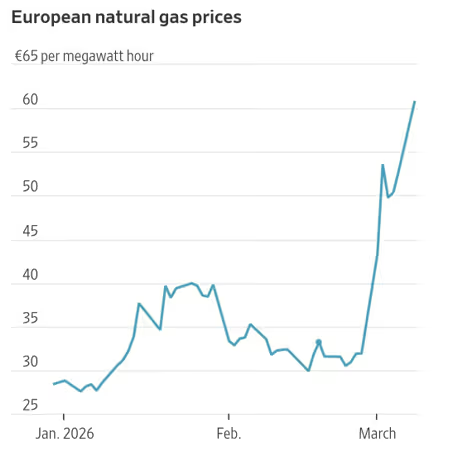
The IEA (International Energy Agency)'s Executive Director has described the current Middle East conflict as the greatest threat to global energy security in history. The numbers back that up: Since the conflict broke out, European wholesale gas prices have risen more than 61%. European natural gas prices (TTF) climbed from around €30/MWh in January to €60–65/MWh by early March. Belgian gas prices are up over 85%. Jet fuel has increased by 70%. And the EU's fossil fuel import bill grew by an estimated €14 billion in a single month.
Two structural facts make this worse than Ukraine. EU gas storage is at its lowest level in four years. And Ras Laffan, which handles around 17% of global LNG capacity, is offline with repairs expected to take three to five years.
According to KBC Economics, Belgium is more exposed to this energy shock than the EU average. Our economy is more energy-intensive relative to GDP than most of our neighbours, and our headline inflation is expected to be pushed higher than the European mean. There is very little buffer.
Most Belgian SMEs don't know their energy cost exposure
Here's the uncomfortable truth: most Belgian SMEs cannot tell you what their fossil fuel exposure costs them in euros and what impact will have on their bottom-line.
Not as an industry average, but as a number based on their energy mix, their volumes, their margins.
That gap exists for a simple reason: energy bills get paid and categorised as overhead, not risk. Fixed-price contracts have delayed the full impact from showing up on the P&L. But that window is closing. And by the time the cost becomes impossible to ignore, the moment to act proactively will have passed.
What your fossil fuel exposure actually looks like in euros
Take a real example. A Belgian SME, a business with a fleet, commercial premises, and gas heating, with a total annual energy cost of €119,527.
That number feels manageable until you break it down. €87,397 of it is pure fossil fuel exposure through road fuels. A further €22,629 is tied to natural gas. Electricity, the one source that can be progressively decoupled from fossil fuel price volatility, represents just 6.4% of the total.
Now run the energy cost scenarios.
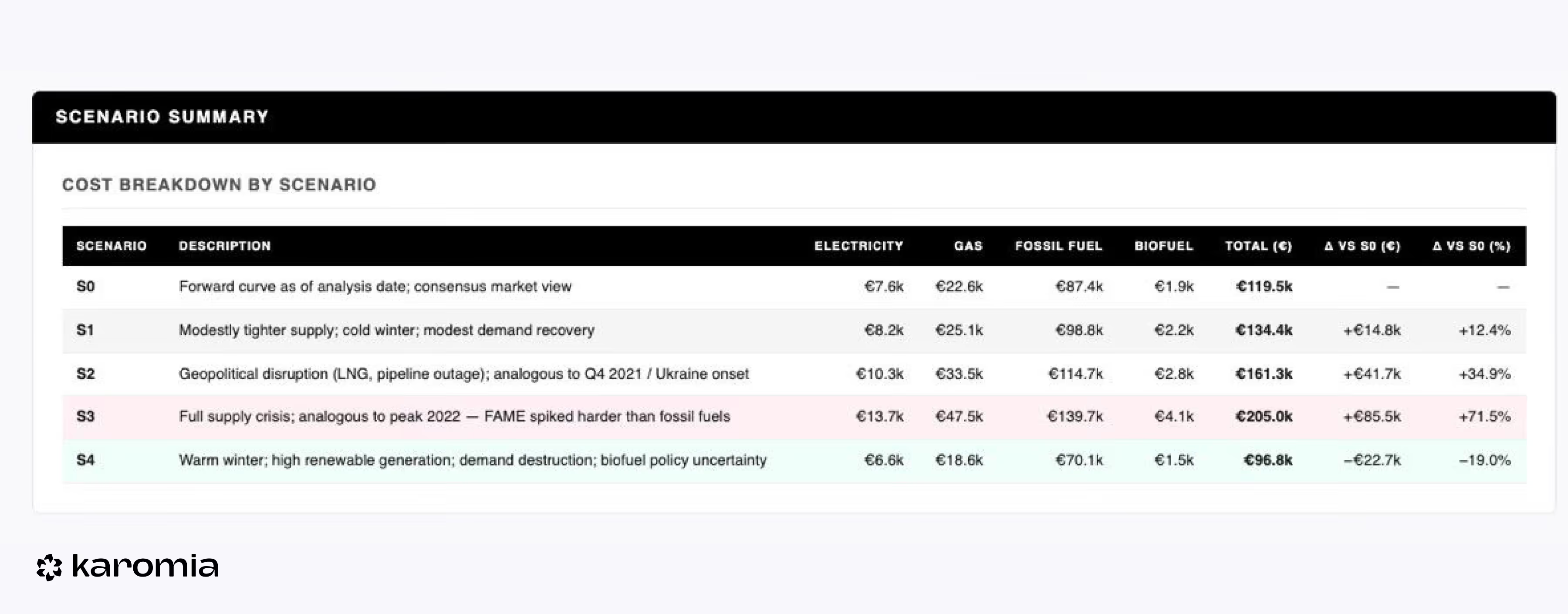
Under S2, a scenario modelled on the Ukraine onset — a level of disruption the current Middle East conflict is already surpassing — this company's annual energy bill rises by €41,700. Under S3, it reaches nearly €205,000.
These aren't industry benchmarks. They're calculated on this company's actual consumption, actual energy mix, and actual cost per unit. If this company is operating on a slim margins and has low price setting power to increase prices, then you’re in a real pickle. Here we’re even making abstraction of the other indirect effects (indexation, price hikes on supplies & contractors, etc.)
The question is simple: do you know what your version of this table looks like and are you ready to deal with it?
How to manage your energy price risk as a Belgian SME
You don't need a sustainability team to act on this. You need clarity on a few things that are fully within reach.
Find out your fossil fuel dependency.
For the company above, more than 73% of total energy spend is directly tied to fossil fuel prices. Most leaders are surprised when they see that figure for their own business. It's the starting point for everything else.
Model your own energy cost scenarios.
With your actual cost structure in front of you, decisions around pricing, supplier contracts, and fleet investment become financial logic rather than guesswork. S2 in the table above is not a worst case. It already happened once, four years ago.
Know where your sector is moving.
Some of your peers are already locking in longer-term energy contracts, electrifying their fleet, or renegotiating with suppliers. Knowing where you stand relative to that gives you context and urgency that a news headline never quite delivers.
Reduce fossil fuel dependency with a plan.
Every step away from fossil fuels is a step away from this kind of energy price volatility. This isn't primarily an environmental argument anymore. It's a financial one.
Calculate your fossil fuel exposure with Karomia
Upload your energy invoices to Karomia and we calculate your energy cost breakdown by source, your fossil fuel exposure, and your cost trajectory across multiple price scenarios.
It takes minutes. And it turns a global energy crisis from background noise into something you can actually make a decision about.
Start your free energy cost analysis →

Receive updates and best practices on all things ESG reporting each month.
Read More