
















First DMA or next one? Both start here.
This is my first DMA
I already have a DMA
NewBring your existing DMA. We use it as your starting point.
Why it matters
The foundation of every sustainability report you write
A DMA refresh feels like starting all over.
Again.
Weeks of desk research, all over again
Last year’s work, stuck in a spreadsheet
Every stakeholder surveyed from scratch
What if your next DMA practically runs itself?
Everything a solid DMA needs, built in
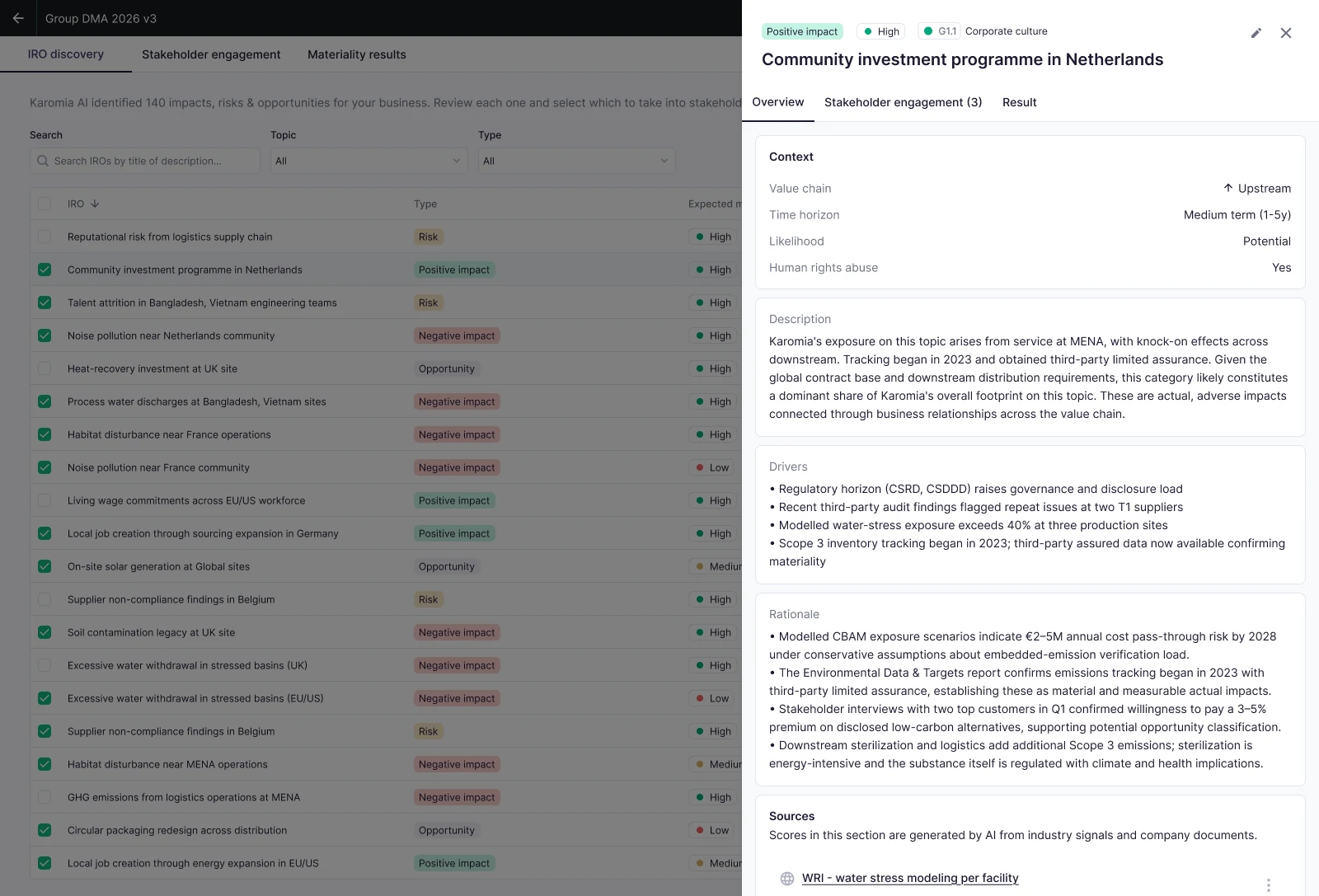
All your impacts, risks and opportunities, identified for you
Karomia analyses your operations and full value chain, then lists your actual and potential impacts, risks and opportunities (IROs). Everything follows the EFRAG guidelines, so the process you follow is aligned and ready for the auditor’s review.
Not a list to tick a box, but an in-depth view of your company, with every IRO linked to its evidence and sources.
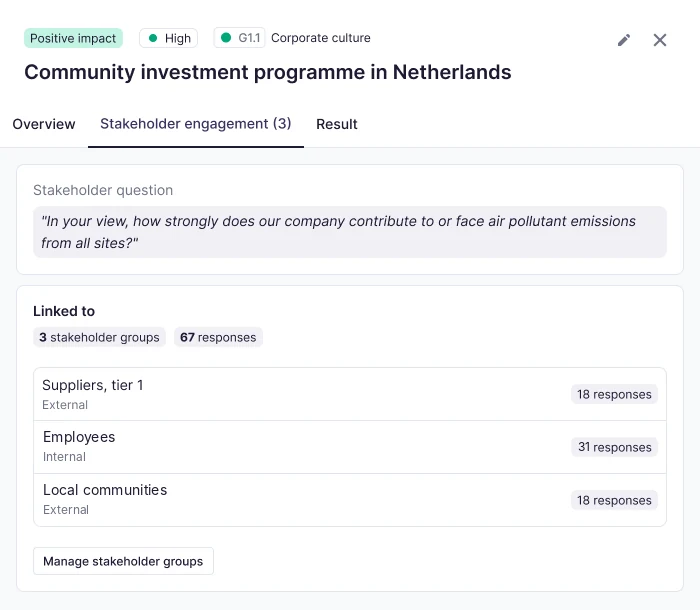
Get stakeholder feedback effectively
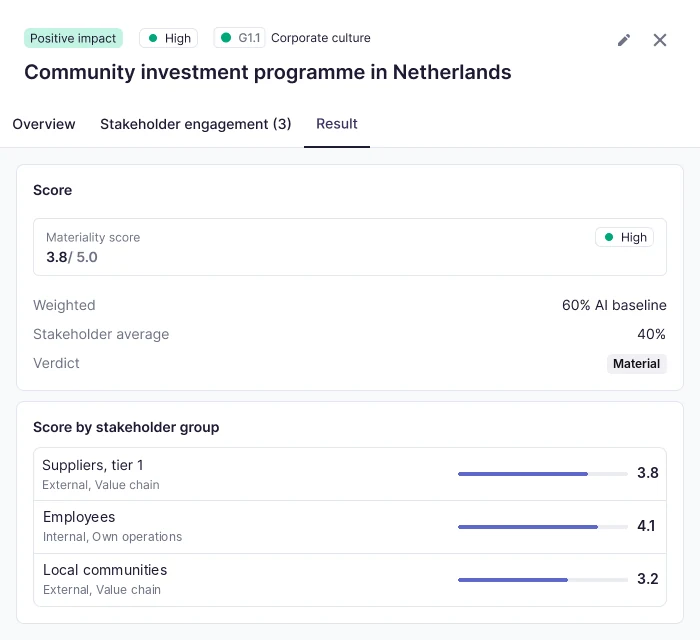
Your stakeholders’ input matters, but you also want to keep it pragmatic. Don’t waste anyone’s time. Share short surveys in any language, run interviews or focus groups. All input is stored securely for the audit and gives you a live view of the materiality outcome.
Trusted by auditors, built for strategy
Karomia’s DMA method has been audited more than 30 times, by every Big Four audit firm. We know first-hand what auditors look for and guide you through it in the platform. Even if you only refresh your existing DMA, it stays fully compliant.
DMA refresh
Your second DMA should not feel like your first
Many companies have already done a DMA. Updating it should not mean starting from zero. We start from your current assessment, whether you did it in Karomia or in a big spreadsheet.
Start from what you have
Pick your past DMA in Karomia, or upload your existing DMA. Karomia’s deep-search engine then uncovers all new and updated impacts, risks and opportunities. These can come from a change in your activities, new scientific insights or simply more transparency in your value chain.
Re-engage with stakeholders to drive deeper
Once you have the updated IRO analysis, re-engage your existing or new stakeholders to collect their feedback, and see the refreshed results roll in.
See and understand the updates live
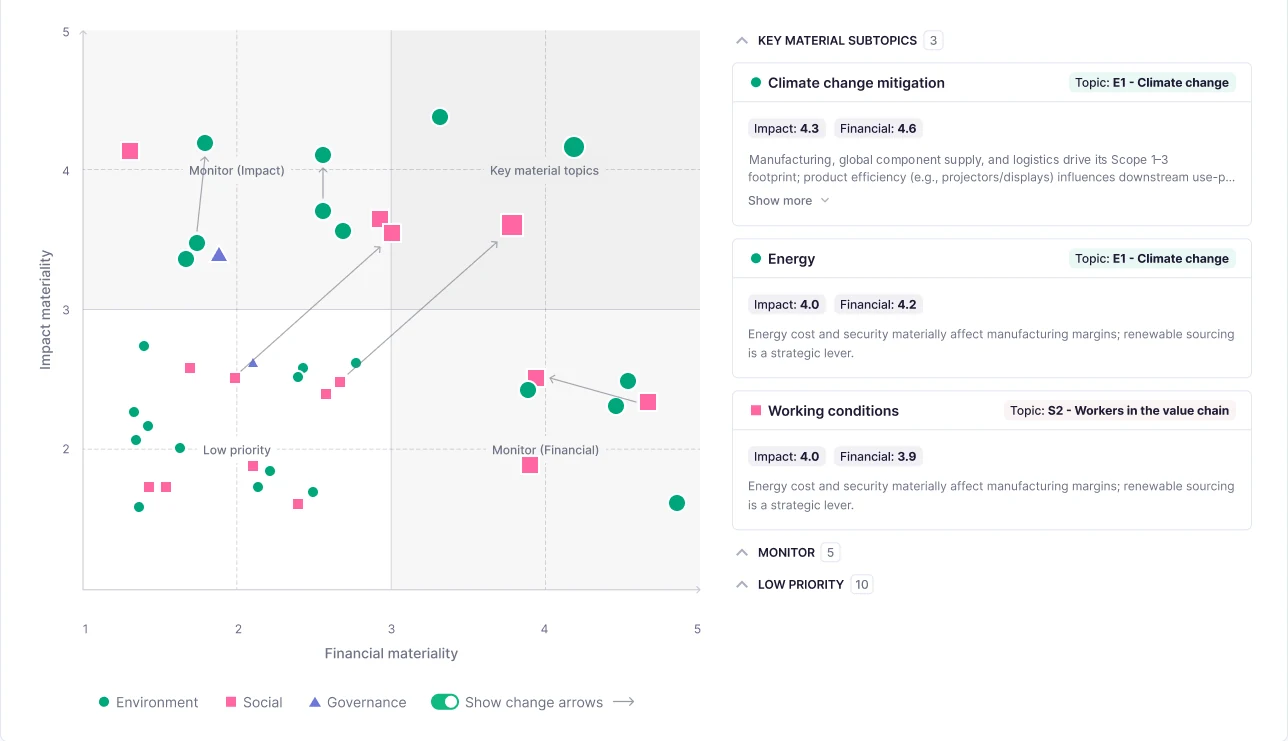
Arrows on your materiality matrix show which topics moved up or down since your last assessment. For each topic, you see the result before, the result now, and the reason for the change.
Customer stories
Your value chain, your stakeholders, your DMA, not a sector template

“Instead of spending weeks on desktop research, we processed our internal documents through Karomia’s platform and had a clear long list of IROs ready for prioritization in hours."



"Karomia made the challenging task of our Double Materiality Assessment manageable and efficient, saving us time and resources while ensuring everything was done right."



“The Karomia platform processed 89 documents in hours and highlighted the key IROs. It saved me weeks of manual work and made sure we were ready for the auditor.”


From DMA to your CSRD report
Your DMA sets the scope of your CSRD report
Your CSRD report covers what is material to your company. In Karomia, the results of your DMA become the scope of your ESRS report: the standards and the data points you report on.
Questions we hear a lot
Don't see your question? Talk to our team, we're happy to help.
Things change: your activities, your suppliers, the rules. A refresh keeps your assessment current without starting over.
Yes. Fill in our template with your topics, subtopics, scores and the reasoning behind them. Adding your IROs is optional. Then upload it.
No. You and your stakeholders score again, based on where your business is today. We then show you how the results compare with last time.
Your first list of impacts, risks and opportunities is ready within hours. Most companies complete their assessment, stakeholder input included, in days rather than months.
Karomia’s DMA method follows the EFRAG guidelines and has been audited more than 30 times, by every Big Four audit firm. Every IRO is linked to its evidence and sources, so your auditor can trace each result.
Ready for your first DMA, or your next one?
See how Karomia runs your assessment, in 30 minutes.