

















Why report on EU Taxonomy?
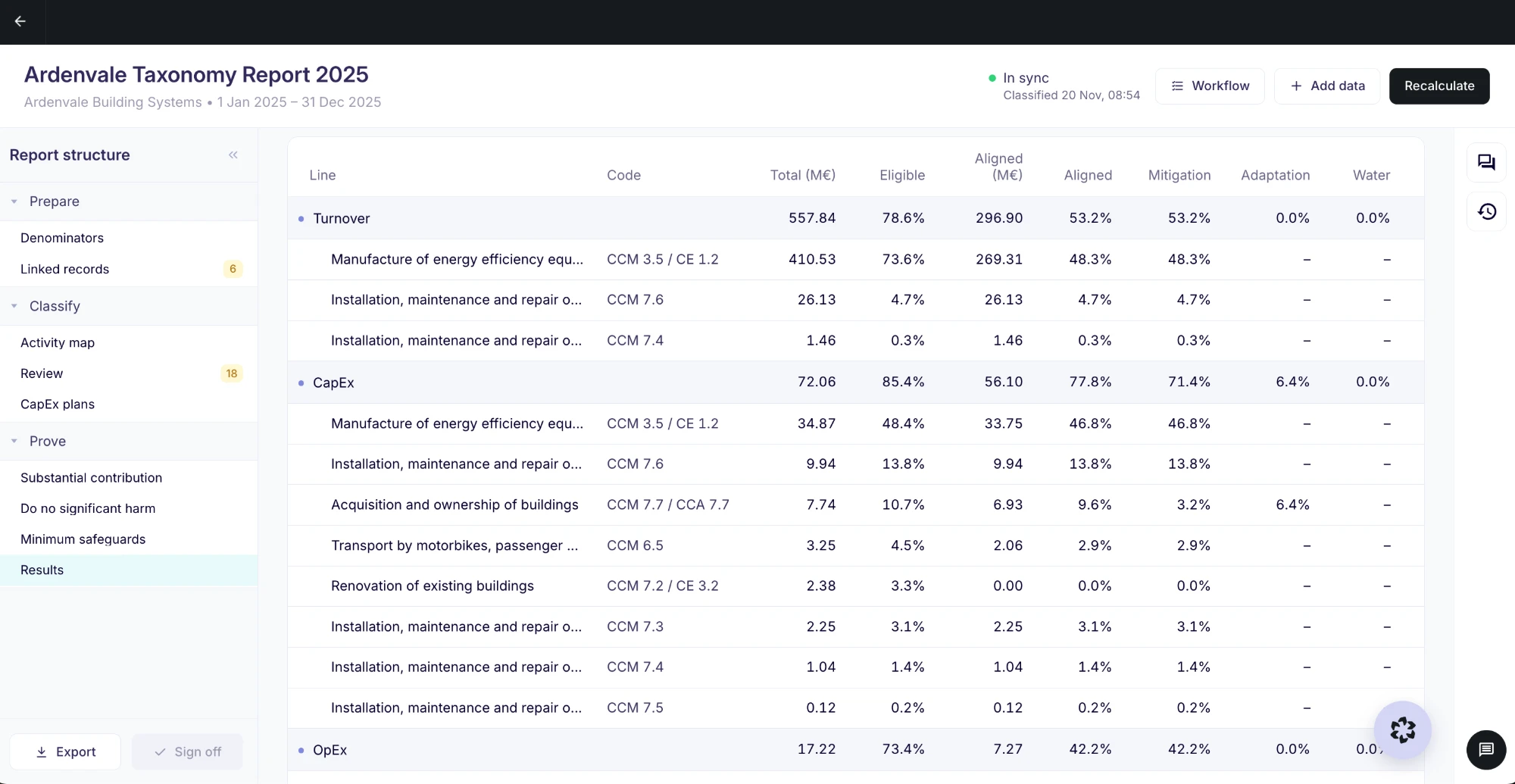
The Taxonomy shows which share of your Turnover, CapEx and OpEx is green.
Required in your CSRD report
Groups in CSRD scope disclose Taxonomy KPIs in their sustainability statement, under limited assurance.
Asked by banks and investors
Aligned activities and CapEx support green loans and feed the Taxonomy reporting of your bank or shareholder.
EU Taxonomy is damn complex, that's why we're here.
Data in a dozen formats. Ledgers, sales, assets and leases live in different systems and never line up.
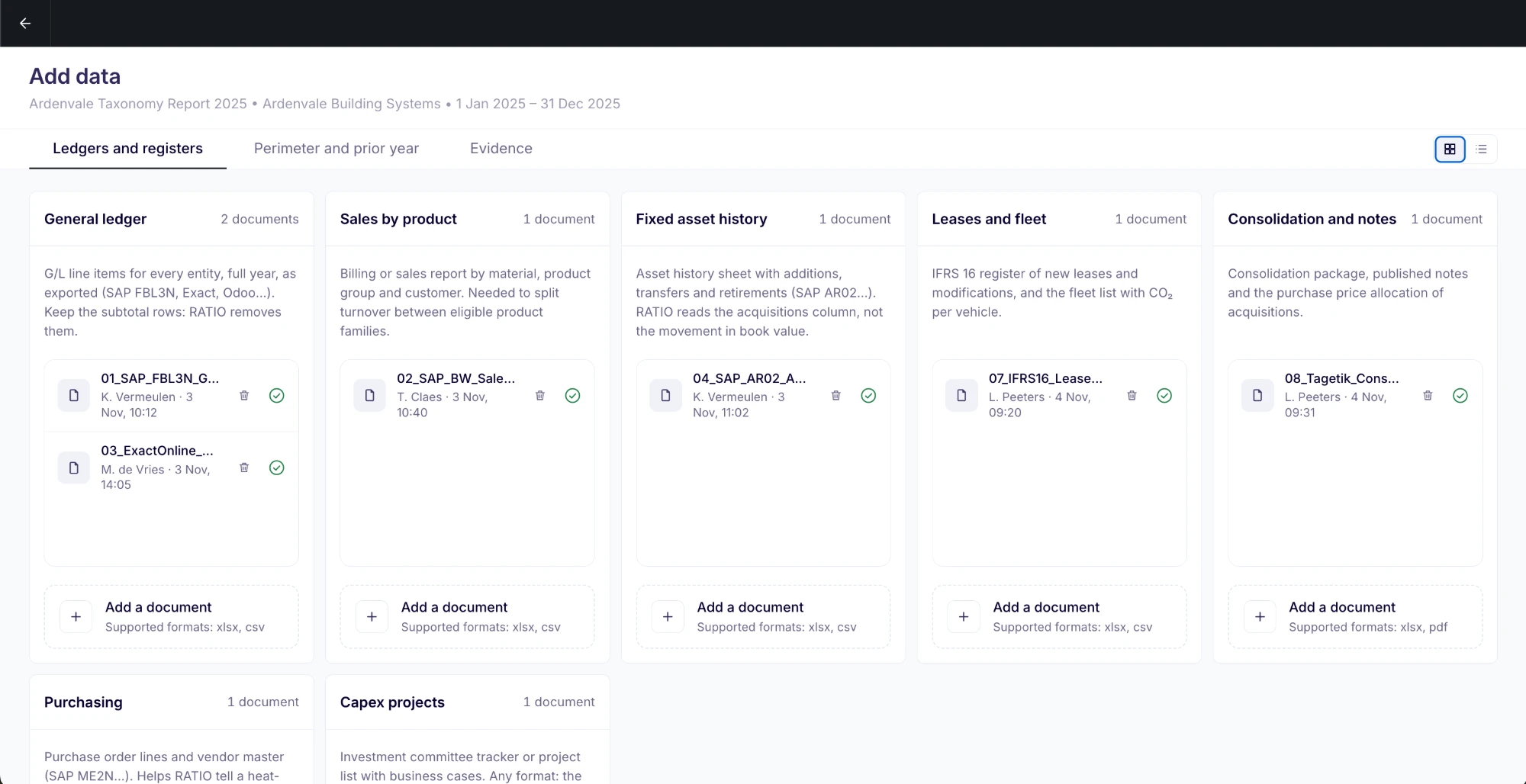
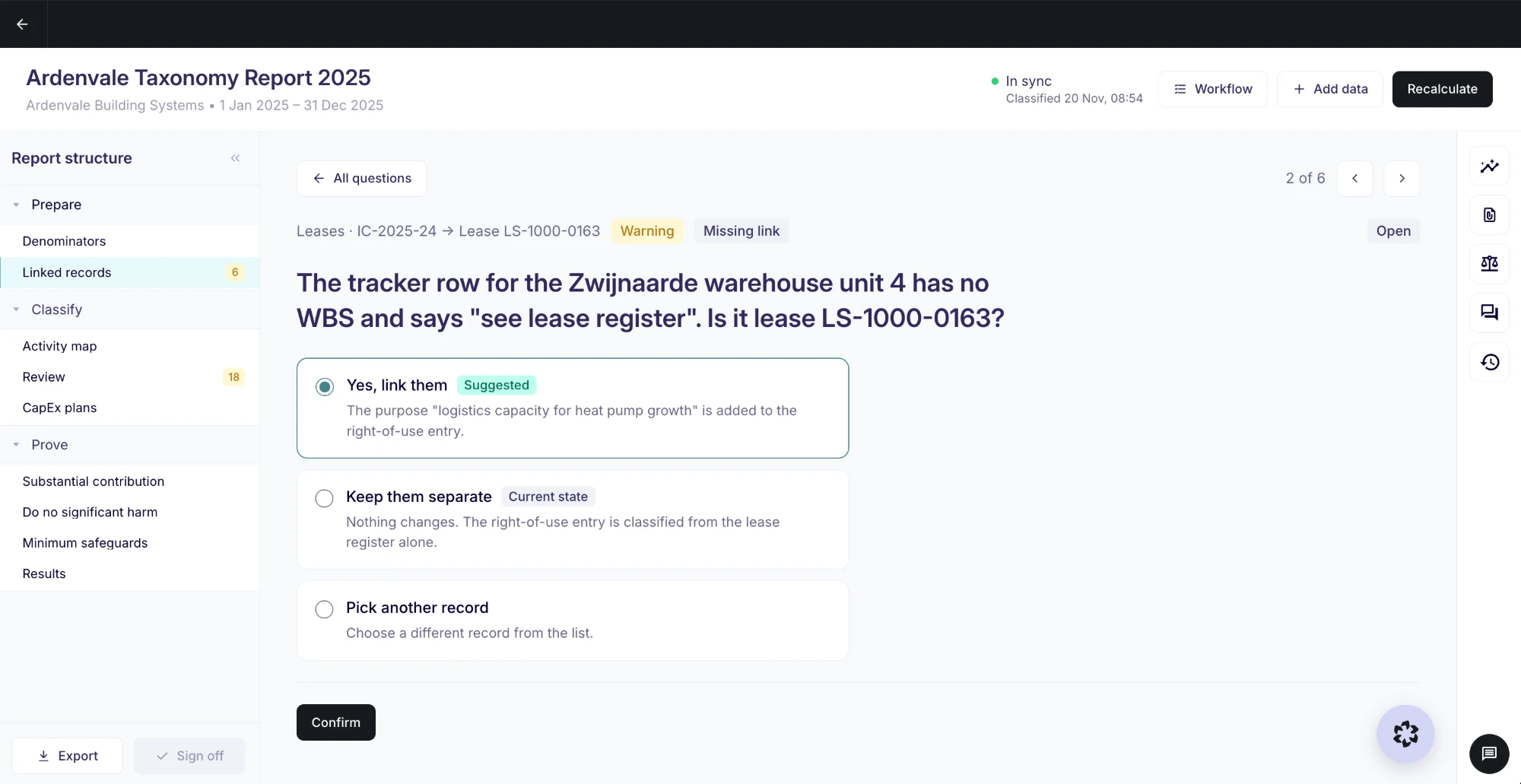
Your files, as they are. Exports from SAP, Exact or Odoo are read as is and linked line by line.
Systems not built for the Taxonomy. Your systems aren't connected the way the Taxonomy needs.
We build your Taxonomy engine. AI and a few targeted questions reconstruct the links, so the report fills itself.
Hundreds of criteria to prove. Thresholds, DNSH and safeguards differ per activity, and evidence is scattered.
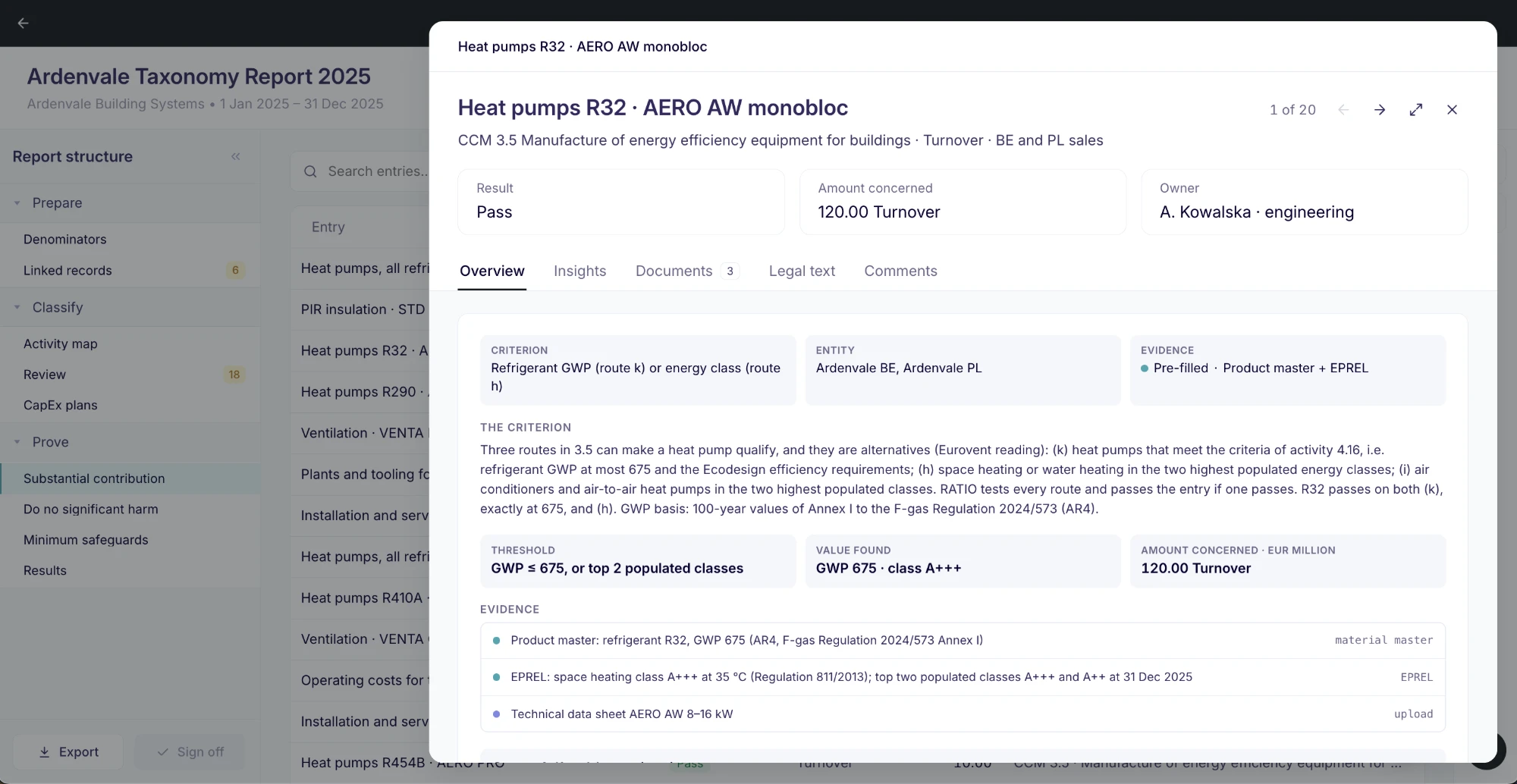
Criteria built in with evidence attached. Every test shows threshold, value and source.
How it works
How it works: from ledger to KPIs in four steps
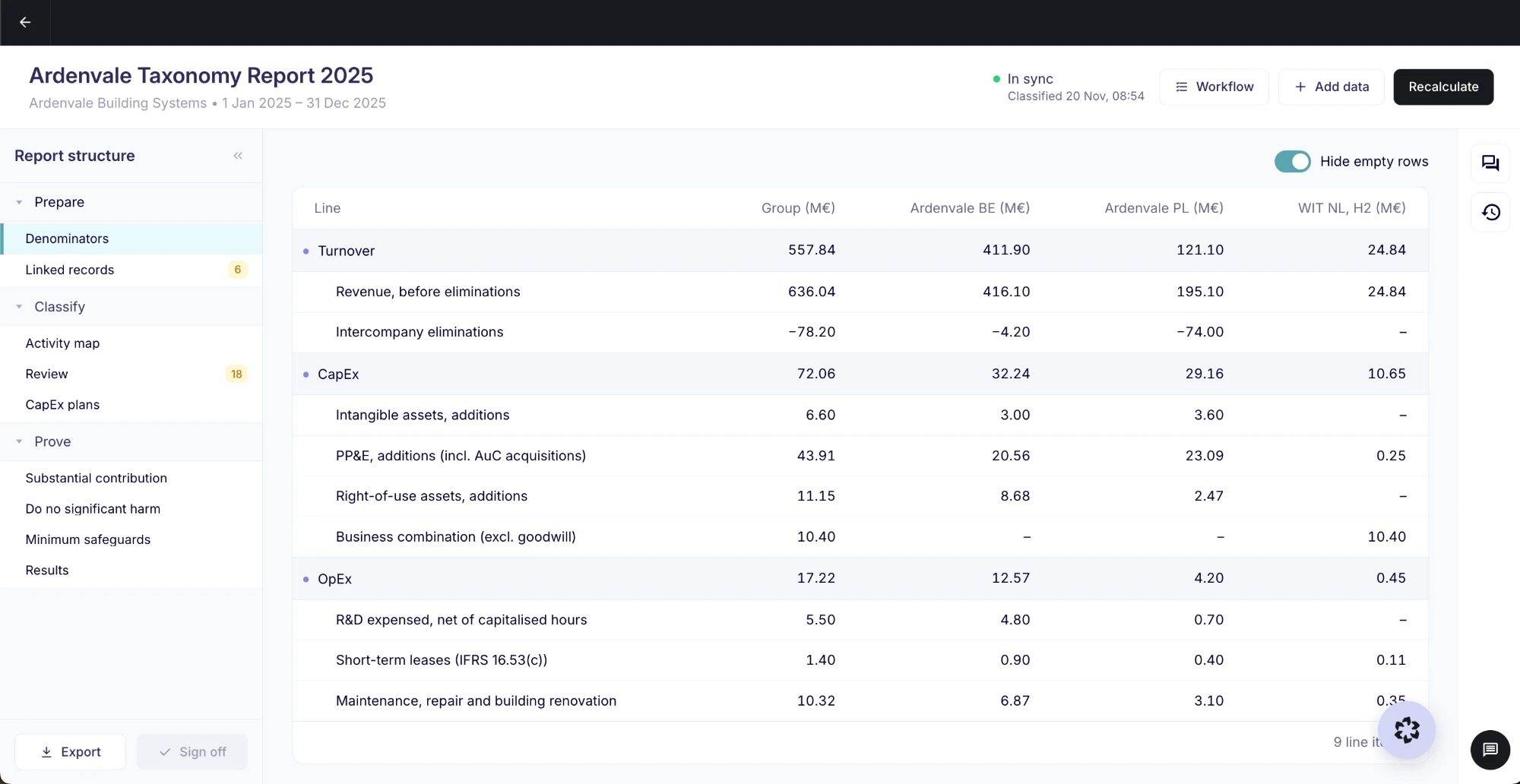
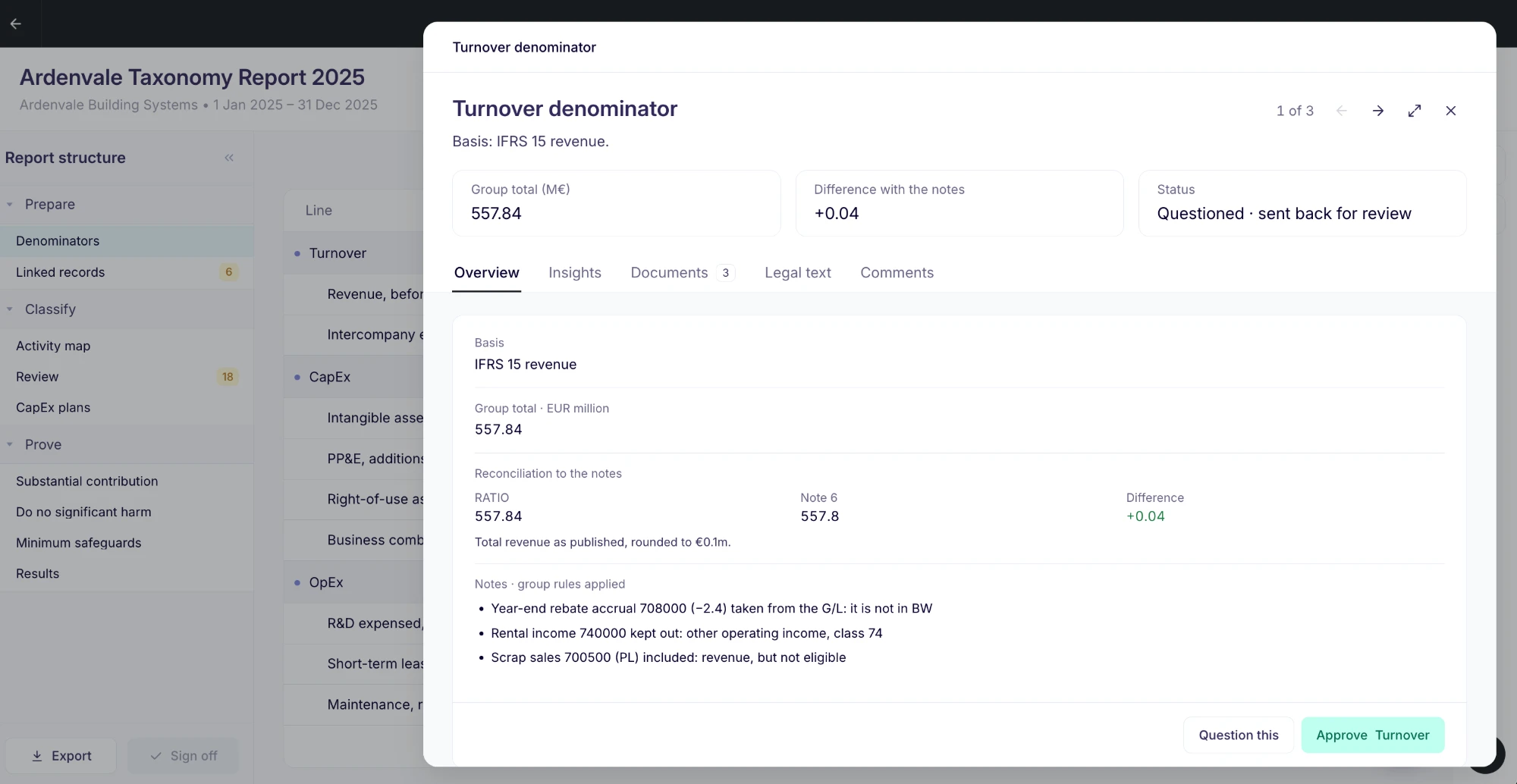
Upload ledgers, sales, assets and leases. Denominators are built per entity and reconciled to your notes.
You approve the totals.
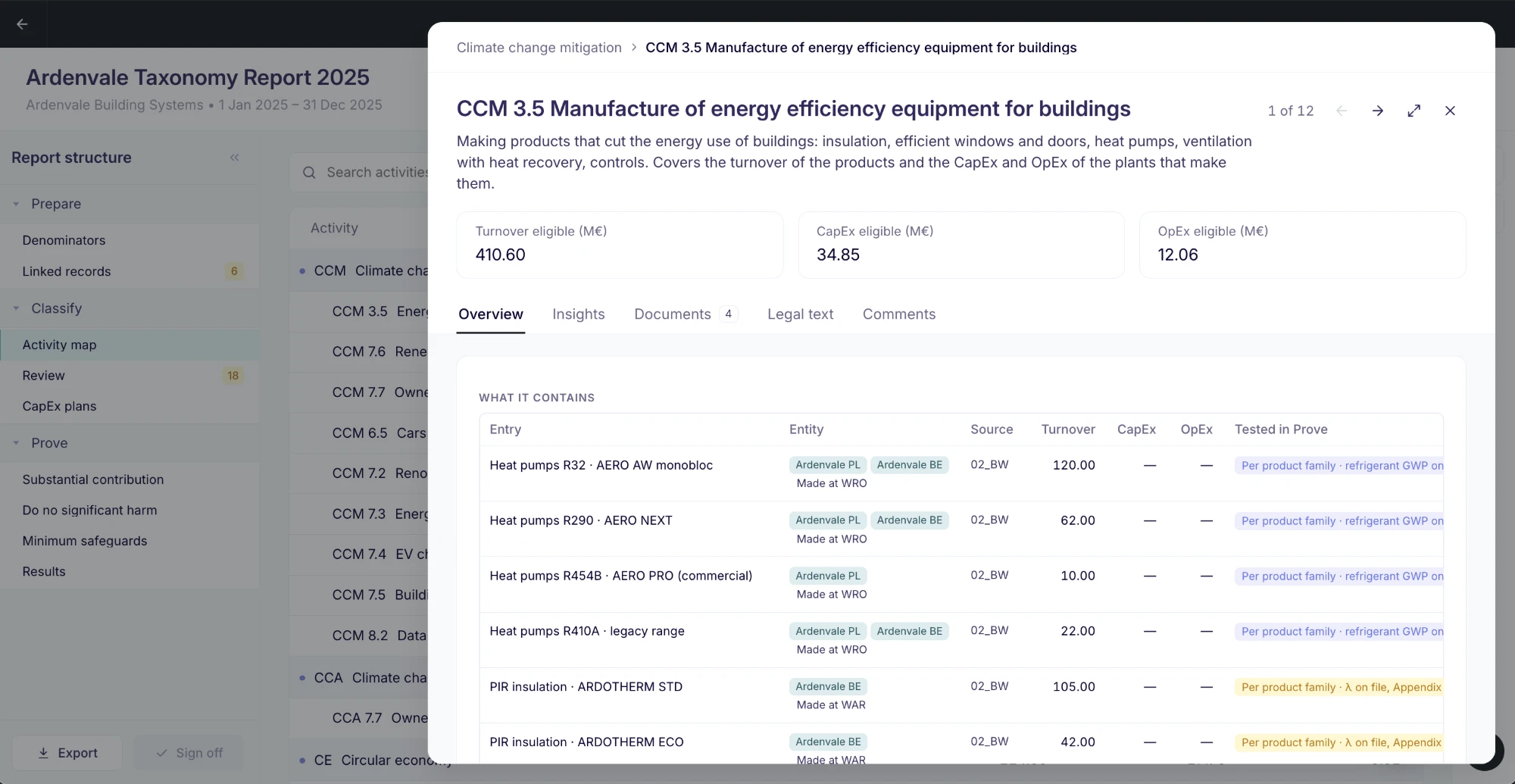
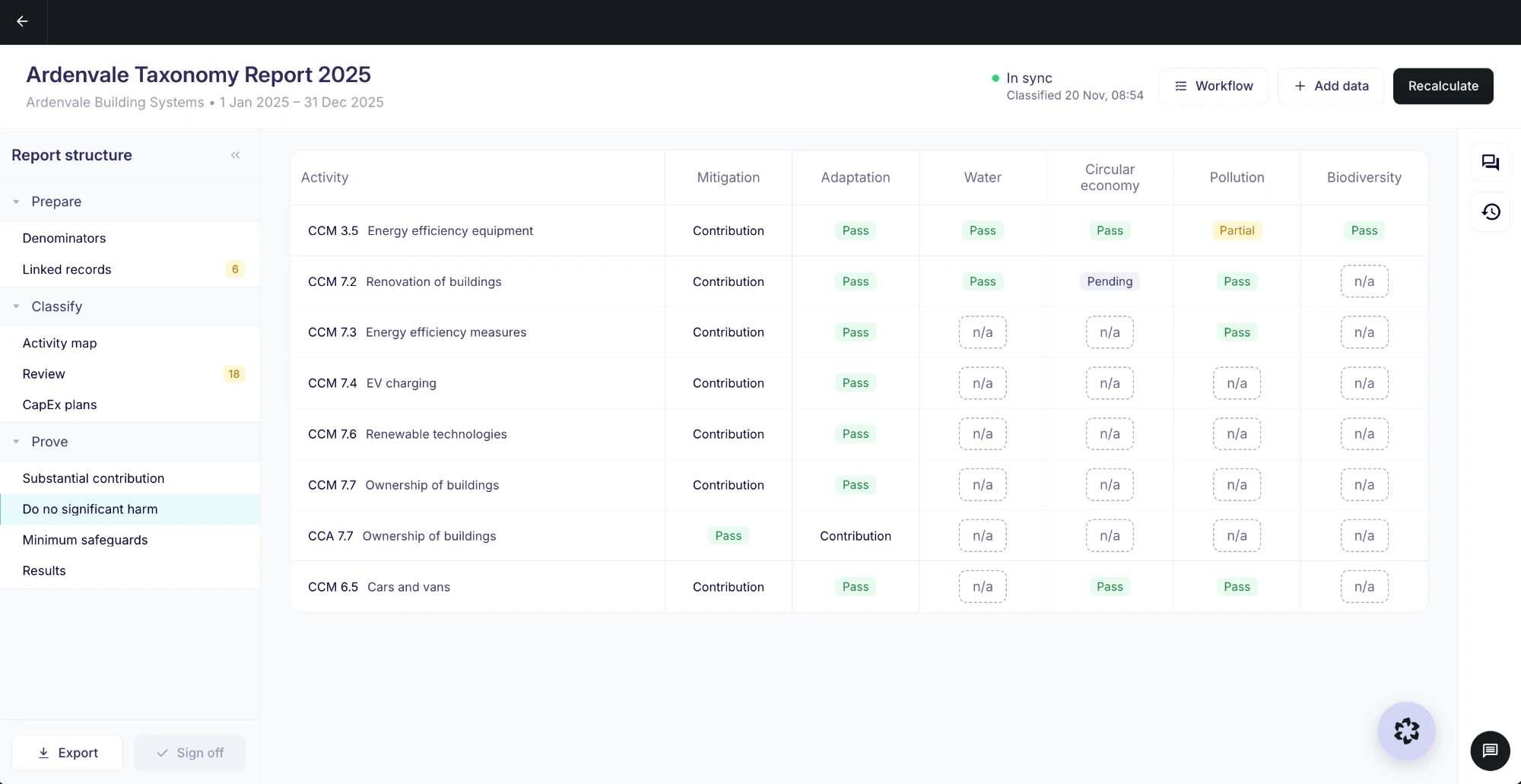
Every euro mapped to an activity, or marked not eligible. The 10% non-materiality rule is proposed per KPI.
You review only what is large or uncertain.
Substantial contribution, DNSH and minimum safeguards tested, with evidence pre-filled. Owners add what's missing.
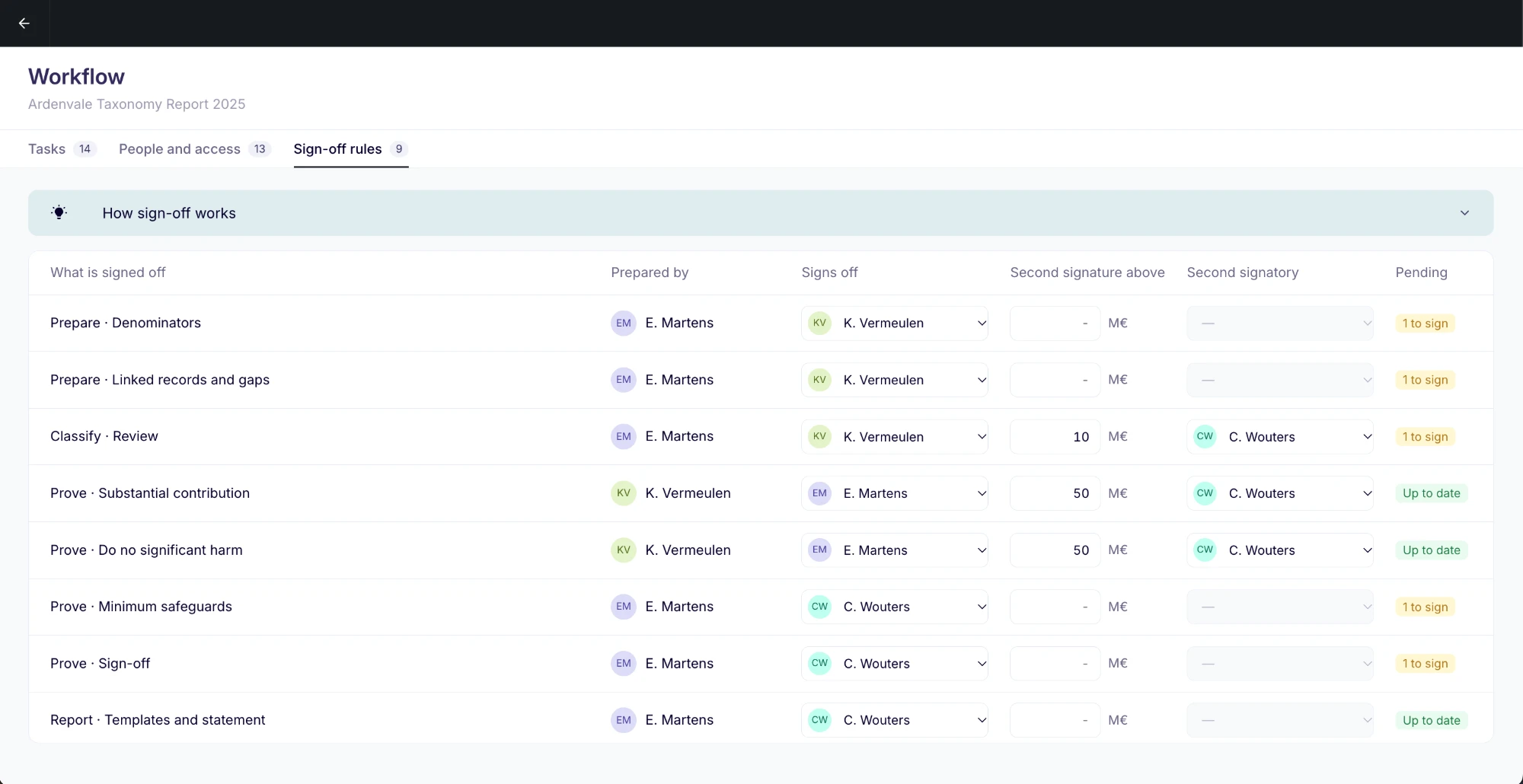
You sign off each criterion.
KPI templates, disclosure text, workbook and evidence pack.
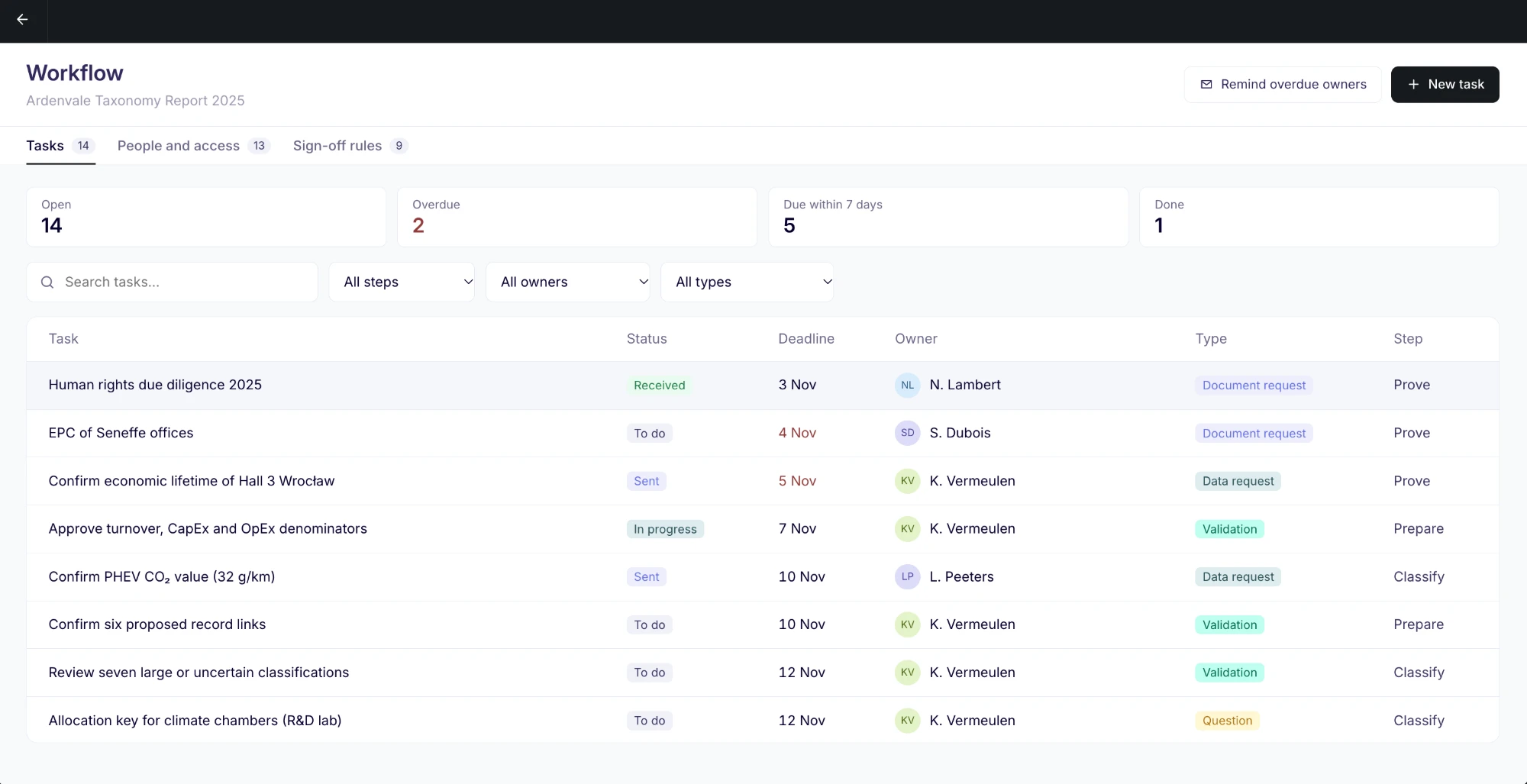
You sign off.
AI proposes, you decide
AI structures your data as you have it, connects your internal sources and applies the Taxonomy rules at every step. Audit proof rules and the regulatory requirements drive the outcome, and a named person validates each step. Every decision is saved, so next year starts from this year's work.
Climate risk built in
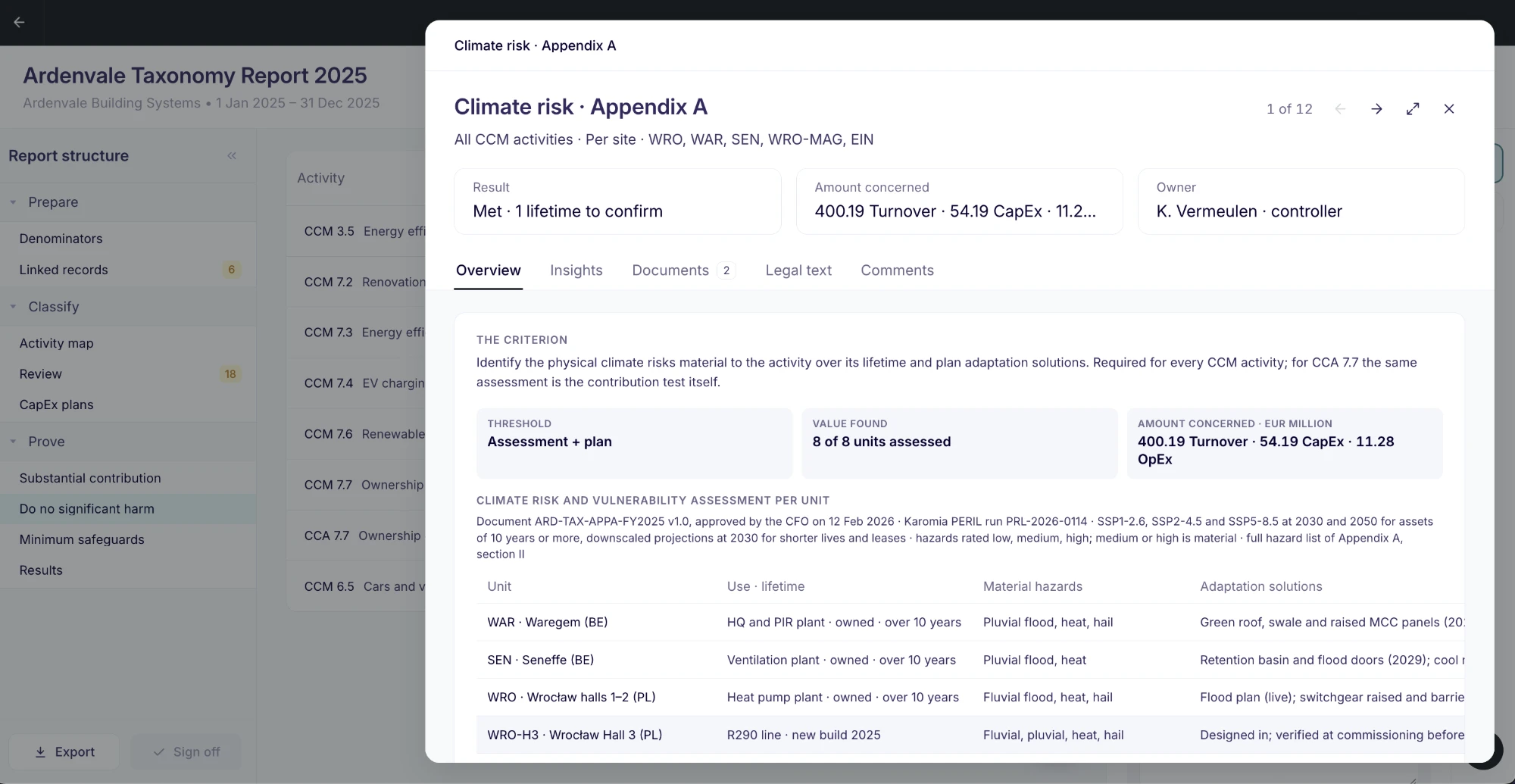
The adaptation DNSH check is required for every climate mitigation activity, and we've got it covered.
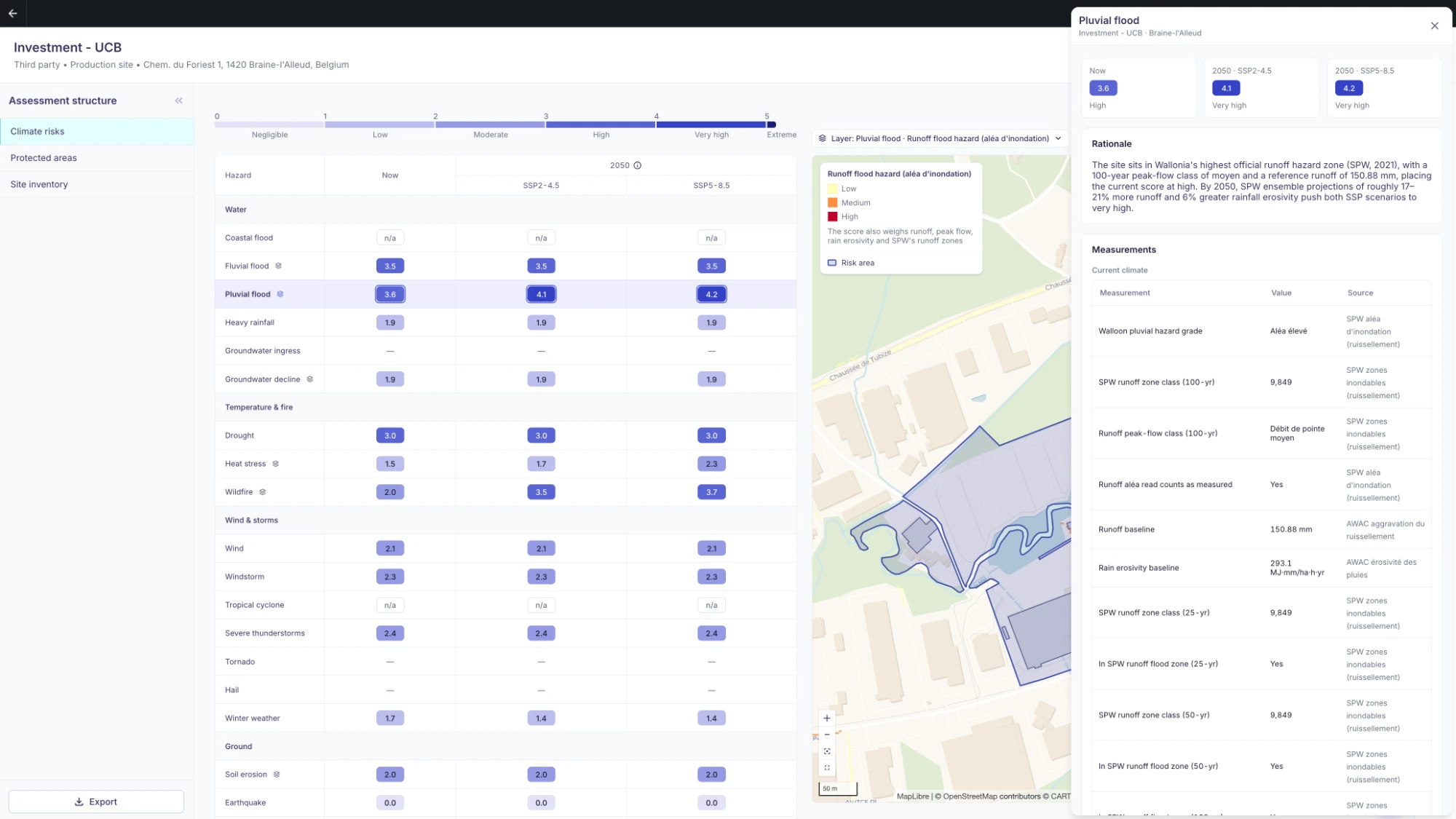
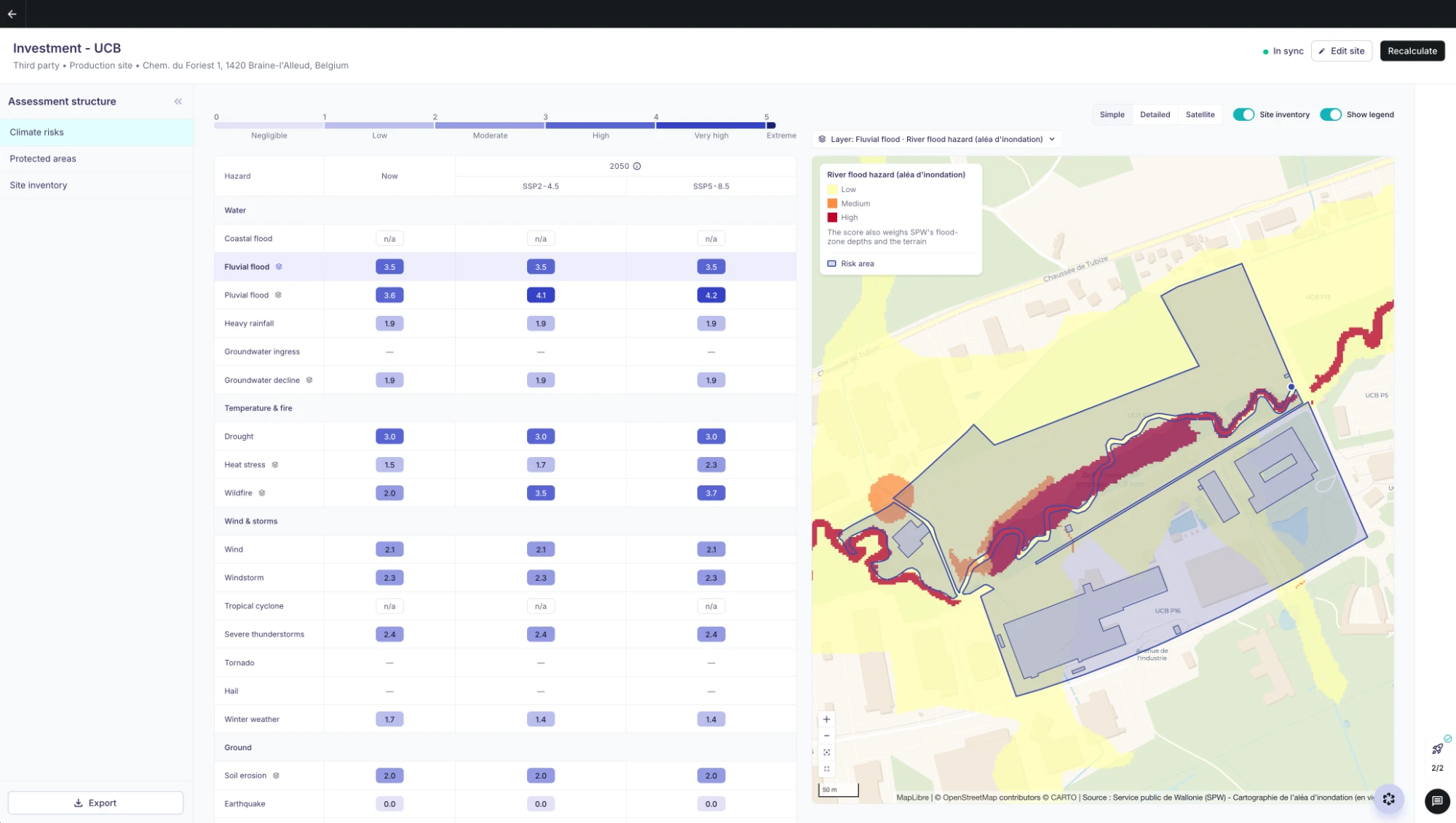
Karomia's climate risk assessment delivers it per site, so most of that work is already done.
- Physical climate hazards screened per site, covering the acute and chronic hazards listed in Appendix A
- Scenarios and time horizons matched to the expected lifetime of the activity or asset
- Material risks flagged per site, with the adaptation measures to address them
- Results feed straight into the DNSH check as evidence per activity
Built for your auditor
Every figure is traceable, every step is signed off
From the first ledger line to the final KPI, Karomia keeps the trail your auditor needs.
- Every figure links back to its ledger line, no double counting
- Four-eyes sign-off per step, with a second signature above a threshold
- Your auditor works directly in the platform
- 30+ audits passed on reports built in Karomia
Questions about EU Taxonomy reporting
Don't see your question? Talk to our team, we're happy to help.
Companies disclose which share of their Turnover, CapEx and OpEx comes from environmentally sustainable activities, based on technical screening criteria per activity.
No. Karomia works with your exports as they are and builds the links the Taxonomy needs.
Activities below 10% of a KPI are proposed as non-material. Using the exemption is always your choice.
Yes. Each result shows threshold, value and source, and auditors get view-only access.
From ledger to audit-ready KPIs
See how Karomia builds your EU Taxonomy report on your own data.